
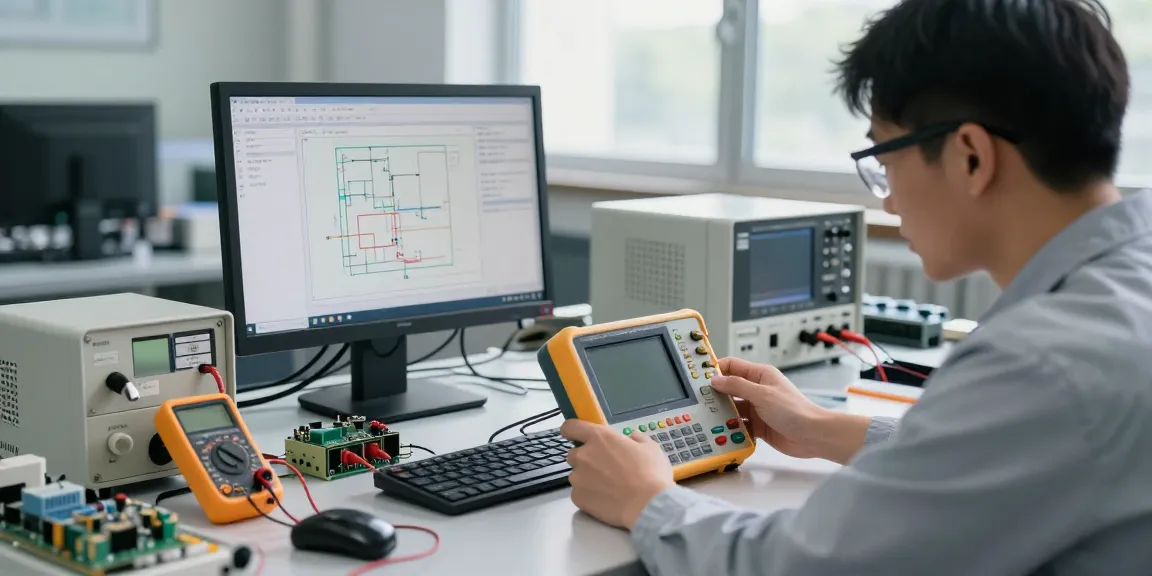
Understanding the Handheld Portable Oscilloscope Technology
The evolution of electronic testing devices has brought forth the Handheld Portable Oscilloscope, a compact and versatile tool that merges the functionalities of an oscilloscope and multimeter. In today’s fast-paced technology landscape, having a portable solution for testing and diagnosing electronic circuits is essential for both professionals and hobbyists alike. This article explores the intricate workings and unique features of handheld oscilloscopes, particularly focusing on the Hanmatek HO52S model.
What is a Handheld Portable Oscilloscope?
A handheld portable oscilloscope is a compact electronic instrument designed for measuring and displaying voltage signals. Its portability allows technicians to conduct tests in various environments—be it in the field, workshop, or lab. Unlike traditional bench oscilloscopes, handheld models are designed for ease of use with intuitive interfaces. The Hanmatek HO52S exemplifies this trend, offering not only oscilloscope capabilities but also multimeter functions.
Key Features and Specifications Explained
Handheld oscilloscopes are packed with key features that enhance functionality and user experience. The Hanmatek HO52S boasts a 50 MHz bandwidth and can sample at 250 MSa/s, making it suitable for a wide range of electronic applications. Its 3.5-inch TFT display provides clear visibility, even in varying lighting conditions. With functions to measure DC/AC voltage, current, resistance, and continuity, this device addresses multiple testing needs.
The Importance of Oscilloscope Bandwidth
Bandwidth is a critical specification that determines the range of frequencies a handheld oscilloscope can accurately measure. A bandwidth of 50 MHz, such as that found in the HO52S, allows it to capture most low to mid-frequency signals, making it versatile for various applications. Understanding bandwidth helps users select the right oscilloscope for their specific testing scenarios, ensuring accurate and reliable results.
How to Use the Handheld Portable Oscilloscope Efficiently
Step-by-Step Guide to Initial Setup
Getting started with the Hanmatek HO52S involves a few straightforward steps. First, power on the device by pressing the designated button. Next, connect the HM5060 probe to the channel input. Selecting the appropriate mode, whether for oscilloscope or multimeter functions, is crucial for effective measurements. Adjust settings such as vertical sensitivity and time base according to the specific signal being measured.
Monitoring Electrical Signals: Practical Techniques
Once the oscilloscope is set up, monitoring electrical signals can begin. Use the triggering options to stabilize the waveform display for better analysis. This is particularly useful when dealing with pulses or transient signals. Adjusting the scaling settings enhances the visibility of the waveform, enabling users to observe changes in amplitude or frequency effectively.
Utilising Multimeter Functions for Comprehensive Testing
The integration of multimeter functions within the HO52S allows for comprehensive testing without needing separate devices. Users can easily switch between measuring voltage, current, and resistance. This feature is beneficial for troubleshooting circuits where multiple types of measurements are necessary. Understanding how to efficiently use these features can significantly enhance productivity in diagnostics.
Common Use Cases for Handheld Portable Oscilloscopes
Field Electronics Troubleshooting Scenarios
One of the primary applications of handheld oscilloscopes like the HO52S is in field electronics troubleshooting. Technicians can diagnose issues on-site, making it easy to identify faults in automotive systems, consumer electronics, and industrial equipment. The portability of this device ensures that complex troubleshooting tasks can be conducted swiftly and efficiently.
Portable Lab Experiments and Education
In educational settings, handheld oscilloscopes serve as excellent tools for students learning about electronic principles. Their portability allows for practical experiments outside the classroom, fostering a deeper understanding of waveforms and electronic signals. Engaging in hands-on learning with devices like the HO52S prepares students for real-world applications in engineering and technology.
Automotive Diagnostics and Signal Testing
Automotive technicians frequently utilise handheld oscilloscopes for diagnosing electrical issues within vehicles. The dual-channel capability of the HO52S allows for simultaneous signal analysis, such as comparing the operation of sensors or actuators. This is critical for efficient fault detection and repair, ensuring vehicles are not only functional but safe.
Best Practices for Accurate Measurements with Oscilloscopes
Calibrating Your Device for Precision
Calibration is essential for ensuring that the measurements taken with the HO52S are accurate. Regularly checking the calibration against known reference signals helps maintain the device’s reliability over time. Learn the specific calibration procedures outlined in the user manual to maximise measurement accuracy.
Avoiding Common Measurement Errors
Even seasoned technicians can encounter measurement errors. To minimise common pitfalls, always double-check probe connections and ensure proper grounding. It is equally important to select the correct measurement range to avoid overflow readings, which can lead to inaccurate data collection. Maintaining a steady hand while measuring and observing waveforms is also vital.
Tips for Storing Waveform Data Efficiently
The Hanmatek HO52S features built-in memory functions that allow users to store and recall waveforms for later analysis. Taking advantage of these functions can greatly enhance productivity, especially when working on complex projects. Regularly managing and clearing memory ensures that users are always prepared with adequate storage for new data.
Future Trends in Handheld Portable Oscilloscope Technology
Emerging Features and Innovations to Watch in 2026
The landscape of handheld oscilloscopes is continuously evolving, with innovations aiming to enhance functionality and user experience. Future models may integrate advanced features like AI-driven signal analysis and enhanced connectivity options, such as Wi-Fi or Bluetooth for remote monitoring. Such developments can facilitate data sharing and collaboration among engineers and technicians.
Impact of IoT on Oscilloscope Applications
The Internet of Things (IoT) is set to revolutionise how handheld oscilloscopes are utilised. As more devices become interconnected, the need for reliable testing tools to diagnose and troubleshoot these systems will grow. Handheld oscilloscopes will play a pivotal role in ensuring the functionality and performance of IoT devices, bridging the gap between hardware and data analytics.
Preparing for Advancements in Measurement Technology
As measurement technology develops, staying informed about the advancements is crucial for professionals in the field. Attending workshops, webinars, and industry conferences can provide insights into upcoming features and best practices. Embracing these changes will enable technicians to remain competitive and proficient in their role.
What are the benefits of a Handheld Portable Oscilloscope?
Handheld portable oscilloscopes offer unparalleled convenience, allowing for easy transport and use in various environments. They integrate the functions of multiple devices, such as oscilloscopes and multimeters, into a single unit, enhancing efficiency during testing and troubleshooting.
How do I troubleshoot common oscilloscopes issues?
Troubleshooting issues with oscilloscopes often requires checking connections, recalibrating the device, and ensuring that settings are correctly adjusted. Consulting the user manual for specific error codes or troubleshooting tips can also assist in resolving common problems effectively.
What is the ideal bandwidth range for my testing needs?
The ideal bandwidth depends on the frequency range of the signals you plan to measure. For most low- and mid-frequency applications, a bandwidth of 50 MHz, such as that of the HO52S, is generally sufficient. However, for higher-frequency applications, consider models with greater bandwidth capabilities.
Can I use a Handheld Portable Oscilloscope for automotive diagnostics?
Yes, handheld portable oscilloscopes are effective for automotive diagnostics. They allow technicians to measure signals from various sensors, actuators, and systems within the vehicle, facilitating efficient troubleshooting and repair processes.
What accessories enhance the functionality of my oscilloscope?
Accessories such as high-precision probes, carrying cases, and additional software can significantly enhance the functionality of handheld oscilloscopes. These tools can help improve accuracy, portability, and usability, making for a more streamlined testing experience.